
The Inevitable Transformation: Thoughts & Ramblings
The decisions that will reshape civilization have already been made. While we speculate about our future, the forces that be have created their own momentum.


The Economic Foundation
The academic evidence is clear. MIT economists Daron Acemoglu and Pascual Restrepo demonstrate that automation always reduces labor’s share in value-added production, with displacement effects that typically outweigh productivity benefits. Their research shows employment growth has slowed over three decades due to accelerating technological displacement, particularly in manufacturing.
This process scales exponentially. Economic analysis of task-based labor models shows that automation consistently reduces overall labor demand because displaced workers cannot fully transition to new roles that complement as opposed to compete with machines. Unlike previous technological shifts that created new job categories, current AI and robotics developments simultaneously target cognitive tasks that represent the core of white-collar employment and routine manual tasks like cashiers, data entry, and basic service work, potentially eliminating entire professional categories across skill levels.
During Sweden’s industrial transformation, displaced ironworkers “ended up in occupations that paid on average 10% less.” The elimination of hand spinning during the British Industrial Revolution created “large-scale technological unemployment,” affecting up to 20% of women and children by 1770. The Second Industrial Revolution saw middle-skilled manufacturing workers reallocated to “comparatively less-skilled occupations,” with older workers switching to unskilled physical labor.
This downward mobility pattern has accelerated in recent decades. Since 1970, real wages for goods-producing workers have stagnated even as productivity has soared, with McKinsey analysis confirming that “there’s no reason that all the gains from automation necessarily are going to benefit workers.” The current transition differs fundamentally: AI affects cognitive not just physical labor, potentially eliminating rather than just displacing entire categories of human work.
The response becomes predictable: Universal Basic Income emerges as an economic necessity. Current projections show 85 million jobs disappearing over the next few years according to SSRN research, while 97 million new roles require master’s degrees that most displaced workers lack. The alternative to UBI (creating artificially maintained “make-work” positions for median-capability individuals whose tasks can be performed more efficiently by AI systems) represents economic irrationality that wastes human potential and resources. UBI transforms from idealistic proposal into systemic requirement for preventing social collapse while enabling productive reallocation of human effort toward activities that complement.
This creates natural stratification where above-average individuals continue providing value through creative, strategic, and interpersonal work that leverages their superior capabilities, while average and below-average populations receive basic income support without the requirement to compete with machines for routine cognitive tasks. The elimination of compulsory employment for median-capability workers allows those with exceptional abilities to focus on high-value contributions without being constrained by artificial job markets designed to provide employment rather than optimize productivity.

Energy Infrastructure
Digital society demands energy abundance on a scale that current infrastructure cannot support. Department of Energy data shows data center power consumption has tripled over the past decade and will double or triple again by 2028. Current centers consuming 17 gigawatts project to reach 130 gigawatts by 2030.
This creates an energy bottleneck that traditional utility models cannot resolve. Goldman Sachs calculates that meeting data center demand requires 85-90 gigawatts of new nuclear capacity. The major tech companies recognize this reality: Google partnered with Kairos Power for 500 megawatts of nuclear capacity, Amazon secured partnerships for 5 gigawatts, while Oracle plans gigawatt-scale data centers powered by small modular reactors.
The current energy crisis has deep historical roots in regulatory overreach following Three Mile Island. The 1979 accident, while causing no deaths or injuries, triggered what the Nuclear Regulatory Commission itself describes as “permanent and sweeping changes” in nuclear regulation. The Three Mile Island accident led to dramatic regulatory changes including expanded emergency preparedness, enhanced operator training requirements, and new design standards that, while improving safety, also dramatically increased construction costs and timelines.
The regulatory response was so severe that public confidence in nuclear energy declined sharply, becoming “a major cause of the decline in nuclear construction through the 1980s and 1990s.” This regulatory strangulation occurred precisely when abundant energy would become essential for computational society.
The historical irony emerges clearly: In September 2024, Constellation Energy announced plans to restart the Three Mile Island nuclear plant to sell power to Microsoft, demonstrating the immense power needs of the tech sector as they build data centers to support artificial intelligence. The same facility that triggered nuclear power’s decline now represents its necessity.
The energy companies’ resistance to abundance becomes economically irrational. Their scarcity-based business model breaks when computational demands require cheap, reliable power at scale. Renewable energy sources like wind and solar cannot provide the consistent baseload power required for continuous AI operations, requiring expensive backup systems and storage infrastructure that multiply costs. Nuclear and geothermal provide the only realistic path forward for true energy abundance, making energy abundance a technical necessity. The current barriers to nuclear expansion stem from regulatory overreach rather than technical limitations. The same facilities shut down for political reasons in the 1980s now represent essential infrastructure for computational society. Tech companies’ pivot toward nuclear partnerships demonstrates market recognition that only abundant, reliable energy sources can support the data center scaling required for AI development.

The Digital Society
The digital society transformation represents a continuous acceleration of human migration from physical to digital social and economic interaction. This process began with Usenet’s “Eternal September” in 1993, when AOL provided internet access to its users, creating what Dave Fischer termed “September 1993 will go down in net history as the September that never ended.” The transformation was permanent: “The potential audience of Usenet became massively larger overnight, now including new and inexperienced users from all walks of life across the country, and the seasonality ended.”
Each technological iteration deepened digital dependence through increasingly sophisticated social and economic systems. AOL Instant Messenger, launched in 1997, demonstrated that real-time digital communication could replace face-to-face interaction for 36 million active users who used the messenger’s away message feature to maintain constant social presence. AIM popularized unique online identities through screen names, establishing the template for digital personas that would define social media.
MySpace emerged in 2003 as the first platform to reach one million monthly active users, peaking at 115 million monthly visitors by April 2008. The platform’s profile customization enabled users to design their digital identities using HTML and CSS, creating personal spaces that often became more expressive of individual identity than physical environments. However, Facebook’s launch in 2004 represented evolutionary refinement rather than disruption, offering cleaner interfaces focused on real identity verification that ultimately captured MySpace’s user base by 2009.

Virtual Economies
The critical transformation occurred when virtual worlds developed persistent economies that generated real-world value. World of Warcraft, launching in 2004, reached 12 million subscribers and generated over $9.23 billion in revenue by 2017, establishing an entire industry of companies offering to sell virtual gold and associated services through what became known as gold farming. The game demonstrated that people develop deeper attachment to systems where they have financial stakes than to systems where they are merely consumers.
Modern Minecraft servers like DemocracyCraft and CityRP represent the logical evolution of this economic integration. DemocracyCraft operates as a fully functional democracy with elected government officials, professional jobs providing real salaries, and complex economic systems including trade jobs, professional positions, and government occupations. Players can create, amend, and remove the rules and laws that govern them while participating in sophisticated business operations that mirror real-world corporate structures.
CityRP extends this model through its custom CityCorp plugin, enabling players to create and run companies, banks, and participate in dynamic stock markets with synthetic securities. The platform’s “echo securities” represent derivatives tied to real-world asset values, creating direct bridges between virtual and physical economies. Players operate businesses ranging from restaurants to law firms, banks to marketing companies, with transactions and ownership structures that demonstrate market-based coordination mechanisms operating independently of traditional institutional oversight.
Social Infrastructure
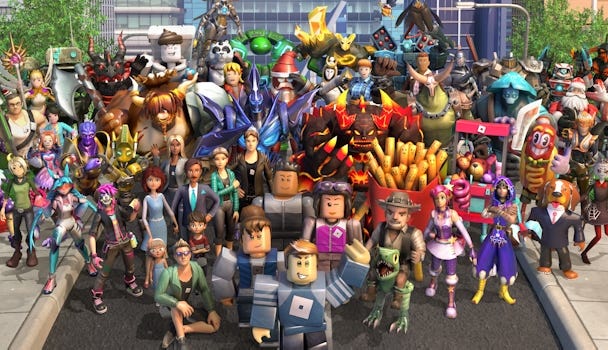
Roblox represents the culmination of user-generated metaverse development, with 89 million daily users creating approximately 40 million games within sophisticated virtual economies. The platform’s evolution from simple gaming to comprehensive metaverse demonstrates how digital spaces can support complex social and economic interaction at scale, with 77.7 million users playing within metaverse environments that provide complete alternatives to physical community engagement.
VRChat exemplifies social virtual reality’s potential, reaching peak concurrent access of 92,000 users who inhabit user-generated worlds that function as persistent social spaces. The platform enables economic activity through virtual goods exchange and demonstrates how digital communities can satisfy social needs previously requiring physical proximity. Discord facilitates this ecosystem’s coordination infrastructure, with the VRChat community alone comprising 343,522 members who organize social and economic activity across virtual worlds.

Digital Migration
The pattern reveals systematic replacement rather than supplementation of physical interaction. As Second Life founder Philip Rosedale noted after recent studies: “people don’t want to be a cartoon avatar while wearing a VR headset,” yet hundreds of millions participate in text-based and 2D virtual worlds that provide complete social and economic functionality. The progression from Usenet through instant messaging to social networks to immersive virtual economies demonstrates technology’s capacity to reshape human priorities around the digital rather than the physical.
Each platform iteration normalized greater digital dependence while providing superior coordination mechanisms for social and economic activity. The economic logic becomes clear: when virtual environments offer more efficient communication, more flexible identity construction, and more accessible economic opportunity than physical alternatives, rational individuals migrate their attention and resources accordingly.
The first known “metaverse” was Second Life, along with games such as IMVU, Habbo Hotel, EVE Online, Runescape, World of Warcraft, Club Penguin, and Roblox. These platforms validated that digital spaces could not only replace but improve upon physical community by eliminating geographical constraints, reducing coordination costs, and enabling economic models impossible in physical space.
You may still interact with the real world, but your life is online. Digital society exists not as futuristic speculation but as current reality for populations whose social relationships, economic activity, and identity formation occur primarily through technological mediation. The metaverse already exists; it started in 1993 and has been expanding through each technological iteration since, creating the infrastructure for the broader technological transformation this analysis describes.

Trust
Francis Fukuyama’s research on trust as social capital becomes prophetic as institutional confidence reaches historic lows. His framework demonstrates that trust enables economic coordination through shared behavioral norms, but this foundation erodes across all major institutions.
Contemporary data confirms systematic trust decline. Only 22% of Americans trust the federal government to do the right thing, while media trust hits record lows at 31%. The 2025 Edelman Trust Barometer shows that 60% of respondents report moderate to high grievance toward institutions, with 40% approving hostile activism including spreading disinformation and threatening violence.
This creates space for change. When traditional institutions lose their legitimacy, people become receptive to alternatives that promise efficiency and transparency.

Cryptocurrency
Approximately 28% of American adults now own cryptocurrencies, with ownership nearly doubling since 2021. Millennials lead at 45% ownership, with Gen Z at 39%, while only 8% of adults aged 50+ participate in the crypto space. European data confirms this pattern, with 24% of Millennials and 19% of Gen Z owning cryptocurrencies across surveyed countries, creating a parallel economic infrastructure that operates outside traditional regulatory frameworks.
This generational divide reflects more than investment preference; it demonstrates how populations raised within digital economies have an innate predisposition toward permissionless systems. The younger generations have grown up in virtual worlds where economic activity occurs through game currencies, where social status derives from digital assets, and where peer-to-peer exchange represents the default coordination mechanism. Research from YouGov shows that nearly 50% of millennials and 37% of US Gen Z believe cryptocurrencies will become widely accepted for legal transactions before 2030, whereas older generations remain skeptical of digital financial systems.

Digital Natives, Digital Money
The connection between virtual world experience and cryptocurrency adoption becomes clear when examining behavioral patterns. Generations that spent formative years managing resources in World of Warcraft, trading items in Minecraft servers, or purchasing virtual goods in Roblox developed intuitive comfort with digital ownership, peer-to-peer exchange, and economic systems operating without traditional banking infrastructure. For populations whose first economic experiences involved buying Robux or trading CS:GO skins, cryptocurrency is familiar territory, not just speculative innovation.
Studies reveal that 56% of Generation Z and Millennials turn to social media influencers for financial information, while 91% of Generation Z respondents rely on social media as their primary source of investing information. This informational infrastructure mirrors the community-driven knowledge systems that govern virtual economies, where players share strategies, coordinate markets, and develop expertise through peer networks as opposed to institutional guidance.
The gaming correlation extends beyond comfort with digital assets to fundamental economic understanding. Populations experienced with supply-and-demand mechanics in virtual marketplaces, familiar with deflationary tokenomics through limited-edition game items, and accustomed to cross-platform asset portability naturally comprehend cryptocurrency’s value propositions. When individuals have already participated in economies where scarcity creates value, where peer-to-peer trading eliminates intermediaries, and where algorithmic rules govern monetary policy, crypto’s design principles appear logical rather than revolutionary.

Generational Replacement
Cryptocurrency enables economic activity that circumvents rather than complements existing institutions. While blockchain development may concentrate among technical specialists, the networks themselves allow anyone to participate in global financial systems without requiring approval from gatekeepers. Each transaction processed through cryptocurrency networks represents economic activity that traditional institutions cannot monitor, tax, or control through conventional mechanisms. Regulatory attempts become irrelevant when all economic activity occurs on-chain through peer-to-peer interactions that eliminate intermediaries entirely.
The question becomes why individuals would voluntarily submit to institutional oversight and transaction fees when direct exchange through on-chain platforms provides superior efficiency, privacy, and control. For generations whose default expectation involves frictionless digital transactions, institutional banking appears antiquated. When 94% of crypto buyers are Gen Z and Millennials, the transformation proceeds through demographic transition not ideological conversion.
This creates systematic institutional erosion. As crypto adoption scales and individuals migrate toward fully on-chain economic activity, traditional financial institutions lose transaction volume, governments lose tax revenue visibility, and central banks lose monetary policy effectiveness. The shift toward permissionless markets directly undermines the foundation of institutional power, which depends on controlling access to economic participation.
The acceleration occurs because digital natives entering the workforce bring digital-first financial habits rather than gradually adopting alternative systems. Their economic preferences derive from decades of experience with virtual world economies that demonstrated superior functionality compared to traditional institutions. The bypass happens organically as populations choose systems that align with their existing behavioral patterns and economic understanding, completing the transition from physical to digital economic infrastructure.

Warfare
Military systems drive transformation through autonomous platforms that remove human cost constraints from conflict. The trajectory toward autonomous military systems began during Cold War strategic thinking and accelerated through DARPA’s systematic development of distributed warfare concepts. DARPA’s Strategic Technology Office developed Mosaic Warfare as a response to great power competition with China and Russia, recognizing that “the capabilities DoD developed to help win the Cold War including stealth aircraft, precision weapons, and communication networks have proliferated to other militaries.”
This transformation aligns perfectly with generational shifts in military recruitment and warfare perception. The US military faces its greatest recruiting shortfall since the inception of the all-volunteer force, with only 9% of American youth ages 16-21 considering enlistment in 2022, down from 13% during COVID-19. Generation Z and Millennials demonstrate an aversion toward traditional military service: 77% of young Americans would not qualify for military service without waivers, while those who do qualify increasingly reject physical combat roles. Internal military surveys reveal that “the top three reasons young people cite for rejecting military enlistment are fear of death, worries about post-traumatic stress disorder and leaving friends and family.”

Digital Warfare
The same generation that rejects traditional military service displays remarkable affinity for remote warfare systems that mirror their gaming experiences. The generation that grew up playing real-time strategy games in the 1990s and 2000s is now old enough to be making acquisition decisions inside the Pentagon. Military contractors recognize this shift: Raytheon developed drone control systems explicitly based on Xbox controllers, estimating $500 million in cost savings over 10 years through decreased crashes and reduced training time. The US military now operates multiple weapons systems through Xbox-style video game controllers, acknowledging that younger operators demonstrate superior proficiency with familiar gaming interfaces than traditional military control systems.
The appeal becomes clear when examining generational preferences. While traditional military service involves physical danger, separation from community, and hierarchical structures that conflict with Gen Z values, remote warfare offers the opposite: operation from safety, integration with existing technological skills, and individual agency in high-stakes decision-making. Young people who refuse to consider infantry positions eagerly engage with drone warfare simulation games, tactical combat scenarios, and FPV (first-person view) combat systems that provide the excitement of conflict without physical risk.
Mosaic Warfare
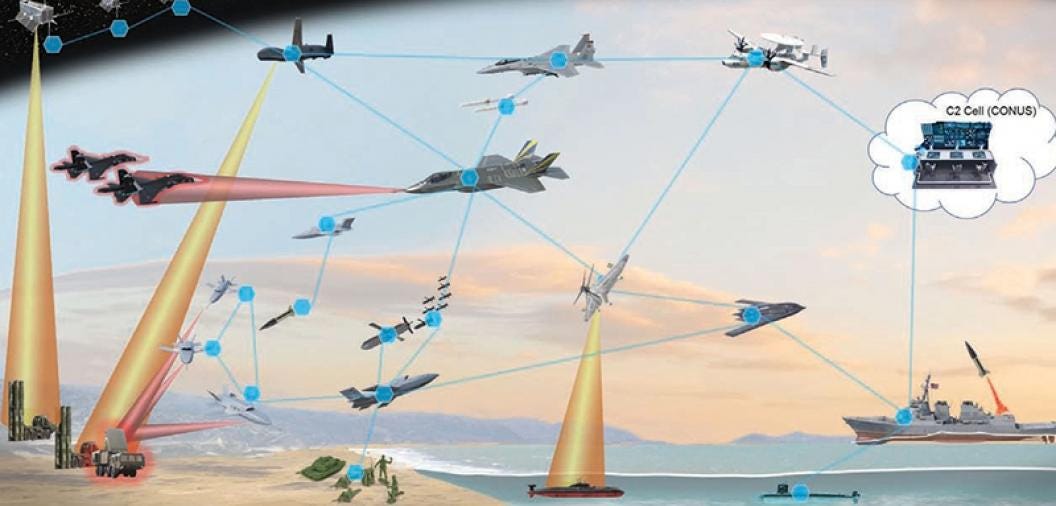
Mosaic Warfare fundamentally reimagines military structure around networked autonomous systems rather than human-centered formations. The concept represents “decision-centric warfare” where “disaggregated manned and autonomous units guided by human command with AI-enabled machine control could use their adaptability and apparent complexity to delay or prevent adversaries from achieving objectives.” This approach differs fundamentally from attrition-based strategies used during World War II and post-Cold War conflicts.
The mosaic model envisions battlefields populated by swarms of interconnected autonomous platforms: aerial drones, ground vehicles, naval vessels, and human-machine hybrid systems that operate as coordinated networks rather than individual units. DARPA’s vision explicitly calls for “individual components can respond to needs in real time to create desired outcomes” and enable “effects webs” to “deter and defeat adversaries across multiple scales of conflict intensity.” Human operators transition from direct combatants to network commanders orchestrating machine swarms.
This evolution represents the perfect synthesis of generational preferences and military effectiveness. Professional real-time strategy gamers demonstrate abilities to multitask at rates exceeding 800 Actions per Minute during peak performance, skills directly applicable to managing multiple autonomous platforms simultaneously. The ability to seamlessly multitask across complex systems represents a core competency that younger generations possess through gaming experience that older military leadership lacks.

Economic and Political Advantages
The economic implications become clear when warfare shifts from human-intensive to capital-intensive operations. Traditional ethical objections to warfare miss the fundamental humanitarian improvement: removing human beings from direct physical harm while maintaining strategic objectives. The progression toward fully autonomous platforms represents the most rational approach to conflict (robots fighting robots eliminates human casualties while achieving military goals more efficiently). Traditional military constraints disappear when conflicts involve equipment rather than personnel. Political resistance to casualties weakens, deployment timelines accelerate, and operational costs shift from ongoing personnel expenses to upfront equipment investments that generate continuous replacement demand.
The US Replicator initiative deploys thousands of autonomous vehicles by August 2025, while Ukraine and Russia plan 4 million drones each for 2025. Ukraine has already conducted fully unmanned operations using coordinated ground vehicles and aerial drones, demonstrating that mosaic warfare concepts work in practice not just theory. The military robotics market grew from $10.8 billion in 2024 to projected $24.6 billion by 2033, representing 9.6% annual growth.
When warfare becomes primarily about equipment rather than personnel, political constraints on military engagement weaken substantially. This enables longer, more frequent conflicts that serve economic rather than strategic purposes. The populations most affected by autonomous warfare become those without access to advanced technological systems rather than those with access operating them. War transforms from shared societal burden to technological competition between those with advanced systems and those without, making conflict more politically palatable for populations whose children operate drones rather than serve as infantry.
The military-industrial-entertainment complex that emerged during the Cold War reaches its logical conclusion: autonomous systems make warfare a spectacle-driven economic engine where human casualties become secondary considerations to equipment performance and replacement cycles. The transition from human soldiers to autonomous platforms transforms war from human tragedy into technological competition, appealing directly to generations raised on competitive gaming, digital communities, and remote interaction systems.

Philosophical Convergence
The economic, technological, and social transformations described above find theoretical grounding across multiple philosophical traditions that independently arrived at remarkably similar conclusions about technology’s relationship to human society, whether they like it or not. These frameworks provide the intellectual foundation for understanding why current developments feel both inevitable.
Martin Heidegger’s analysis of technology as “enframing” directly explains the energy infrastructure crisis driving AI development. His concept of “standing reserve” describes how nuclear power, renewable energy, and fossil fuels all become mere resources optimized for computational efficiency rather than human flourishing. The Three Mile Island regulatory response exemplifies Heidegger’s warning: bureaucratic systems treat nuclear energy as a controllable resource instead of recognizing technology’s tendency to reshape human priorities around its own requirements. Today’s rush to restart nuclear plants for data centers validates his theory that technology ultimately determines its own conditions of use.
Jacques Ellul’s technological determinism illuminates why autonomous warfare systems develop regardless of strategic necessity. Ellul argued that technique becomes self-perpetuating, seeking ever more efficient solutions to problems that technique itself creates. Mosaic Warfare exemplifies this perfectly: military technology creates distributed threats that require distributed responses, which generate more complex coordination problems that demand more sophisticated autonomous systems. The progression from human soldiers to human-machine hybrids to fully autonomous platforms follows Ellul’s prediction that technical solutions inevitably replace human judgment with algorithmic optimization.
Ayn Rand’s defense of rational self-interest provides the moral framework that legitimizes this transformation. Her philosophy argues that individual reason and technological achievement represent humanity’s highest values, justifying the pursuit of AI capabilities, energy abundance, and autonomous systems without traditional moral constraints. The new elite structure emerging around infrastructure builders from resource controllers reflects Rand’s vision of productive achievement replacing political rent-seeking. Cryptocurrency adoption validates her prediction that voluntary exchange would eventually bypass coercive institutions, creating market-based coordination mechanisms that operate through individual choice not collective control.
Nick Land’s accelerationist analysis ties these elements together into a coherent trajectory. His academic work describes capitalism as inherently driving toward “technocapital singularity” where market logic and technological capability merge into self-reinforcing systems that transcend human oversight. Current developments validate Land’s framework: AI systems optimize energy infrastructure, energy abundance enables more sophisticated AI, autonomous platforms reduce human coordination costs, and cryptocurrency creates permissionless markets that accelerate all these processes.
Land’s prediction proves prescient: “Earth is captured by a technocapital singularity as renaissance rationalization and oceanic navigation lock into commoditization take-off. Logistically accelerating techno-economic interactivity crumbles social order in auto-sophisticating machine runaway.” The collapse of institutional trust, migration to digital social interaction, and replacement of human-centered economic activity with algorithmic optimization all follow his predicted pattern.
It’s important to note that while these philosophical frameworks provide analytical tools for understanding current technological transformation, the philosophers themselves held vastly different worldviews and would likely disagree with aspects of this analysis. Heidegger intended his concept of “enframing” as a warning about technological domination, not a description to accept; he advocated for contemplative resistance to technological reduction of human existence. Ellul similarly viewed technological determinism as a threat to human freedom that should be resisted rather than embraced. Even Rand, who would support market-driven technological development, emphasized individual agency in ways that might conflict with any analysis suggesting systemic inevitability beyond human choice.
However, certain elements of their insights align to illuminate the current trajectory. Heidegger’s analysis of how technology reshapes human priorities around its own requirements explains the energy infrastructure response to AI development, regardless of his prescriptive intentions. Ellul’s description of technique becoming self-perpetuating helps explain autonomous warfare development, even though he saw this as problematic. Rand’s framework legitimizes productive achievement and voluntary exchange mechanisms, even if she might question analyses that minimize individual agency. Land’s accelerationist framework most directly supports the thesis, though even his work contains more dystopian elements than this analysis emphasizes.
The philosophical convergence reveals why resistance movements face structural challenges in preventing transformation’s core trajectory, while acknowledging that the original thinkers might advocate different responses to these same patterns. Together, these frameworks explain why the transformation feels both chosen and unchosen; individual actors make rational decisions within technological systems that collectively produce outcomes no one specifically intended, even as the philosophers who identified these patterns might prescribe different approaches to managing them.

The New Elite
The emerging power structure validates Rand’s vision of productive achievement replacing political rent-seeking. Infrastructure builders accumulate wealth and influence by creating coordination mechanisms rather than controlling scarcity. Successful cryptocurrency protocol designers, AI system architects, and autonomous platform developers gain status through enabling abundance and efficiency.
This represents a fundamental shift from traditional elite formation. Instead of extracting value from existing resources, the new aristocracy creates public goods that improve systemic functionality. Their legitimacy stems from building systems that work better than existing alternatives, whether through more efficient energy distribution, more reliable autonomous platforms, or more transparent financial networks.
The technical complexity required for infrastructure development creates natural barriers to entry that concentrate influence among those with specialized knowledge. However, unlike traditional oligarchies that maintain power through legal privileges and resource control, the new elite must continuously demonstrate value creation to maintain relevance. Market mechanisms and technological obsolescence provide ongoing challenges to established positions.

Social Stratification
Society stratifies along the lines predicted by Heidegger’s analysis of technology’s relationship to human dwelling. The division occurs between populations that maintain direct engagement with physical reality and those who accept full mediation through technological systems. This bifurcation follows capability and preference.
Those with sufficient resources and inclination preserve connection to physical community, agriculture, and unmediated social interaction. They use technology as a tool while maintaining agency over their relationship to it. This population includes both wealthy individuals who can afford alternatives to digital dependence and communities that deliberately choose lower-technology lifestyles.
The majority population becomes increasingly dependent on digital mediation for social connection, economic activity, and entertainment, fulfilling Ellul’s prediction that technique would reshape human priorities around technological requirements. Data centers become the primary economic infrastructure, housing servers that run digital lives through games, virtual reality, social media, and automated services. The Eternal September migration from physical to digital community reaches its logical conclusion.
Physical infrastructure adapts to serve digital priorities in place of the human community. Warehouses store goods ordered through digital platforms, ghost kitchens prepare food for delivery, and autonomous systems handle logistics without human interaction. Physical space becomes optimized for digital service delivery, reflecting Heidegger’s concept of everything becoming “standing reserve” for technological optimization.

Inevitable not Chosen
The transformation proceeds through what Land describes as “technocapital singularity”. Society has already committed to digital dependence through existing systems: cloud computing, social media platforms, remote work, digital banking, and automated supply chains. These technologies aren’t optional anymore for economic participation, validating Ellul’s insight that technique becomes self-perpetuating once sufficiently developed.
Systems that fail to adopt these technologies become inferior and lose competitive advantage, while early adopters capture benefits and market position. The coordination problem resolves itself through revealed preferences: individuals have already accepted the transformation by purchasing smartphones, using social media, storing personal information online, utilizing computerized vehicles, and adopting smart home technologies. Each adoption decision represents implicit acceptance of the technological trajectory, creating network effects that make reversal increasingly costly and unlikely.
The billions of individual decisions that led to current technological adoption demonstrate collective coordination rather than isolated consumer choices. When similar behavioral patterns emerge across diverse populations, cultures, and economic systems, this reveals underlying structural forces. The convergence of individual rational decisions into systemic technological transformation validates the inevitability thesis through demonstrated collective behavior not just theoretical projection.
Each component reinforces others through the network effects and acceleration loops described in accelerationist theory. AI development requires massive energy infrastructure, which necessitates new financing mechanisms, which depend on cryptocurrency systems, which operate through autonomous protocols, which replace traditional institutions. The process generates its own momentum through market logic. Switching costs become necessary investments to avoid the decay and destruction that affects systems failing to adapt to technological requirements.
Resistance movements can affect transition timing and benefit distribution, but cannot prevent the underlying technological convergence. The economic incentives align with technological capabilities in ways that transcend individual preferences or collective decisions. As predicted by Land’s framework, market mechanisms and technical efficiency override democratic control when they conflict.
This represents path dependence on a civilizational scale, confirming Heidegger’s warning that technology reshapes human possibilities around its own requirements. The choices made during early internet development, cryptocurrency implementation, and AI system design constrain future alternatives. We’re not selecting among equal options; we’re managing consequences of decisions already embedded in technological infrastructure.
Understanding this inevitability creates greater opportunity for beneficial outcomes. Those who recognize the trajectory can position themselves to accelerate positive developments and capture value during the transition, while those who resist contribute nothing productive to society’s advancement. Acceptance enables faster growth and better resource allocation by eliminating wasteful resistance to optimal technological solutions.
The timeline accelerates because each component enables faster development of others. More sophisticated AI systems improve energy optimization, better energy infrastructure supports more autonomous systems, expanded autonomous capabilities reduce human coordination costs, and reduced coordination costs enable faster innovation cycles. The acceleration loop operates independently of human intentions or political processes, but conscious alignment with this trajectory produces superior outcomes for participants.
Nothing requires this future to be dystopian or utopian. The same technologies that enable surveillance and control also create abundance and capability. The same systems that reduce human agency also eliminate many sources of human suffering. The transformation generates both opportunities and risks at scale, reflecting technology’s fundamental ambiguity.
Environmental constraints dissolve with nuclear and geothermal energy abundance, while water requirements for data centers create opportunities for large-scale desalination infrastructure along the American Southeast and Pacific Coast that serves both computational and community needs. International variations in governance become irrelevant when economic activity occurs through borderless internet and metaverse platforms that transcend traditional political boundaries. Religious resistance fails to recognize that technological advancement represents the fulfillment of divine mandate (the upward progression of humanity serves the Creator’s purpose by enabling humans to better sustain creation and fulfill their intended role).
Alternative technological development paths focused on artificial sustainability constraints represent inefficient allocation of resources when market mechanisms provide superior coordination and outcomes. Democratic governance proves ineffective compared to market-based coordination systems like futarchy, where outcomes are determined by capital allocation not political rhetoric. Markets reveal truth through price discovery and resource allocation, while democratic processes obscure truth through political manipulation and collective action problems. The transition proceeds through market logic rather than political consensus because markets provide more accurate information and better incentives for optimal resource allocation.
The question becomes who shapes the transition’s direction and who benefits from its outcomes rather than whether the transformation occurs. Those who understand its inevitability can position themselves advantageously within emerging structures. Those who resist or ignore it become subjects instead of participants in determining how it unfolds.
The future arrives through what Rand would recognize as voluntary exchange and what Land describes as market acceleration. Existing coordination mechanisms get gradually replaced with more efficient technological alternatives. By the time the transition becomes obvious to mainstream institutions, the underlying infrastructure will already determine the range of possible responses. The transformation completes itself not through conquest but through the accumulation of individual choices that collectively produce systemic change.
References
Acemoglu, D. & Restrepo, P. (2019). “Automation and New Tasks: How Technology Displaces and Reinstates Labor.” Journal of Economic Perspectives, 33(2), 3-30. https://www.aeaweb.org/articles?id=10.1257%2Fjep.33.2.3
Cambridge University. (2024). “Attitudes toward automation and the demand for policies addressing job loss.” Political Science Research and Methods. https://www.cambridge.org/core/journals/political-science-research-and-methods/article/attitudes-toward-automation-and-the-demand-for-policies-addressing-job-loss-the-effects-of-information-about-tradeoffs/FEC158539610F2B1D81D6F182280BE76
Chistyakov, D. (2022). “Philosophy of Accelerationism: A New Way of Comprehending the Present Social Reality.” RUDN Journal of Philosophy, 26(3). https://journals.rudn.ru/philosophy/article/view/32115
Department of Energy. (2024). “DOE Releases New Report Evaluating Increase in Electricity Demand from Data Centers.” https://www.energy.gov/articles/doe-releases-new-report-evaluating-increase-electricity-demand-data-centers
Edelman Trust Institute. (2025). “2025 Edelman Trust Barometer.” https://www.edelman.com/trust/2025/trust-barometer
Fracassi, C., Khoja, M. & Schär, F. (2024). “Decentralized Crypto Governance? Transparency and Concentration in Ethereum Decision-Making.” SSRN. https://papers.ssrn.com/sol3/papers.cfm?abstract_id=4691000
Fukuyama, F. (1995). Trust: The Social Virtues and the Creation of Prosperity. Academic analysis: https://iacajournal.org/articles/10.36745/ijca.423
Goldman Sachs Research. (2025). “Is nuclear energy the answer to AI data centers’ power consumption?” https://www.goldmansachs.com/insights/articles/is-nuclear-energy-the-answer-to-ai-data-centers-power-consumption
Heidegger, M. (1954). “The Question Concerning Technology.” Stanford Encyclopedia of Philosophy. https://plato.stanford.edu/entries/heidegger/
Holzer, H. (2022). “Understanding the impact of automation on workers, jobs, and wages.” Brookings Institution. https://www.brookings.edu/articles/understanding-the-impact-of-automation-on-workers-jobs-and-wages/
IMARC Group. (2024). “Military Robotics and Autonomous Systems Market Size, 2033.” https://www.imarcgroup.com/military-robotics-autonomous-systems-market
Land, N. (1995). “Meltdown.” Virtual Futures Archive. https://www.virtualfutures.co.uk/discover/meltdown
Oxford Open Economics. (2024). “A task-based approach to inequality.” https://academic.oup.com/ooec/article/3/Supplement_1/i906/7708121
Rand, A. (1967). “What Is Capitalism?” Stanford Encyclopedia of Philosophy. https://plato.stanford.edu/entries/ayn-rand/
Security.org. (2025). “2025 Cryptocurrency Adoption and Consumer Sentiment Report.” https://www.security.org/digital-security/cryptocurrency-annual-consumer-report/
Staunton, M. (2023). “Cryptoeconomics as governance: an intellectual history from ‘Crypto Anarchy’ to ‘Cryptoeconomics.’” Internet Histories, 7(3). https://www.tandfonline.com/doi/full/10.1080/24701475.2023.2183643
Subaveerapandiyan, A. & Shimray, S. (2024). “The Evolution of Job Displacement in the Age of AI and Automation: A Bibliometric Review (1984–2024).” Open Information Science. https://www.degruyterbrill.com/document/doi/10.1515/opis-2024-0010/html?lang=en
Three Mile Island Historical Analysis. (2021). “Documenting Three Mile Island.” Bulletin of the Atomic Scientists. https://thebulletin.org/2009/03/documenting-three-mile-island-2/
Walker, J.S. (2004). “Three Mile Island: A Nuclear Crisis in Historical Perspective.” U.S. Nuclear Regulatory Commission. Academic review: https://academic.oup.com/jah/article-abstract/92/1/312/783893
Bengtsson, N., van Maarseveen, R. & Poignant, A. (2023). “The Effects of Worker Displacement During the Industrial Revolution: Evidence from Sweden.” SSRN. https://papers.ssrn.com/sol3/papers.cfm?abstract_id=4071040
Clark, B., Patt, D. & Schramm, H. (2020). “Mosaic Warfare: Exploiting Artificial Intelligence and Autonomous Systems to Implement Decision-Centric Operations.” Center for Strategic and Budgetary Assessments. https://csbaonline.org/research/publications/mosaic-warfare-exploiting-artificial-intelligence-and-autonomous-systems-to-implement-decision-centric-operations
DARPA Strategic Technology Office. (2017). “Strategic Technology Office Outlines Vision for ‘Mosaic Warfare.’” https://www.darpa.mil/news/2017/sto-mosaic-warfare
Fischer, D. (1994). “September 1993 will go down in net history as the September that never ended.” Original Usenet post. Referenced in multiple academic sources on internet history.
Fryer, D. (2024). “Aligning Emerging Concepts and Capabilities With Mosaic Warfare.” Contemporary Issues in Air and Space Power. https://ciasp.scholasticahq.com/article/127303-aligning-emerging-concepts-and-capabilities-with-mosaic-warfare
Keeble, A. (2024). “Occupational switching during the second industrial revolution.” Economics Letters. https://www.sciencedirect.com/science/article/abs/pii/S0165176524001654
McKinsey Global Institute. (2018). “What can history teach us about technology and jobs?” https://www.mckinsey.com/featured-insights/future-of-work/what-can-history-teach-us-about-technology-and-jobs
Nuclear Regulatory Commission. (2009). “Three Mile Island Led To ‘Sweeping And Permanent’ Changes.” NucNet. https://www.nucnet.org/news/three-mile-island-led-to-sweeping-and-permanent-changes
Oxford Economics Department. (2023). “Technological unemployment in the British industrial revolution: the destruction of hand spinning.” https://www.economics.ox.ac.uk/publication/1339882/ora-hyrax
BusinessCraft » CityRP • Economy • Jobs • Democracy Minecraft Server. (2024). https://minecraft-mp.com/server-s154871
CityCorp Plugin Documentation. (2024). CityRP Minecraft Server. https://cityrp.wiki.gg/
DemocracyCraft Wiki. (2024). https://wiki.democracycraft.net/Main_Page
Discord VRChat Community Statistics. (2024). “Join the VRChat Discord Server!” https://discord.com/invite/vrchat
New World Notes. (2019). “30% of VRChat’s Daily Users Wear HMDs.” https://nwn.blogs.com/nwn/2019/02/vrchat-users-hours-stats.html
Road to VR. (2020). “Social VR App ‘VRChat’ is Seeing Record Usage Amidst the Pandemic.” https://www.roadtovr.com/vrchat-record-users-coronavirus/
The Metaverse Problem. (2025). “Where is the internet going in the future?” https://substack.com/history/post/169205301
BingX Blog. (2025). “From Savings to Satoshis: Why Gen Z and Millennials Are Betting on Crypto for Their Financial Future.” https://blog.bingx.com/bingx-insights/from-savings-to-satoshis-why-gen-z-and-millennials-are-betting-on-crypto-for-their-financial-future/
Cashtree Global. (2023). “Crypto Adoption Trends. Millennials and Gen Z at the Forefront.” https://medium.com/@CashtreeGlobal/crypto-adoption-trends-a45527c5ed8
CoinLive. (2024). “Changing Tides: Cryptocurrency Adoption Across Generations.” https://www.coinlive.com/articles/changing-tides-cryptocurrency-adoption-across-generations
Crypto.news. (2023). “Crypto adoption across generations: examining ownership age trends.” https://crypto.news/crypto-adoption-across-generations-examining-ownership-age-trends/
FinTech Magazine. (2024). “Gen Z & Millennials Lead Europe’s Crypto Adoption, Survey Shows.” https://fintechmagazine.com/articles/bitpanda-gen-z-millennials-spearheading-crypto-adoption
Nasdaq. (2024). “Gen Z and Crypto: Will There Be a Breakthrough in Worldwide Adoption?” https://www.nasdaq.com/articles/gen-z-and-crypto-will-there-be-a-breakthrough-in-worldwide-adoption
ResearchGate. (2023). “Digital assets for digital natives: Exploring familiarity and preference for cryptocurrency among millennials and Gen Z.” https://www.researchgate.net/publication/376841220_Digital_assets_for_digital_natives_Exploring_familiarity_and_preference_for_cryptocurrency_among_millennials_and_Gen_Z
Roqqu Pay. (2024). “The Crypto Generation: 5 Reasons Why Millennials and Gen Zs Are Dominating Digital Investments.” https://roqqupay.medium.com/the-crypto-generation-5-reasons-why-millennials-and-gen-zs-are-dominating-digital-investments-05cc25cc3531
Berkeley Political Review. (2024). “Gen Z’s Military Malaise.” https://bpr.studentorg.berkeley.edu/2024/02/27/gen-zs-military-malaise/
Federal News Network. (2023). “Military struggles to bring Gen Z into the armed forces.” https://federalnewsnetwork.com/defense-main/2023/12/military-struggles-to-bring-gen-z-into-the-armed-forces/
Military.com. (2022). “Even More Young Americans Are Unfit to Serve, a New Study Finds.” https://www.military.com/daily-news/2022/09/28/new-pentagon-study-shows-77-of-young-americans-are-ineligible-military-service.html
Military.com. (2023). “A Gen Z Marine Explores Solutions to the Military’s Recruiting Crisis.” https://www.military.com/off-duty/books/2023/08/22/gen-z-marine-explores-solutions-militarys-recruiting-crisis-we-dont-want-you-uncle-sam.html
National Network Opposing the Militarization of Youth. (2024). “Why Don’t America’s Young People Want to Join the Military?” https://www.nnomy.org/index.php/en/home-73768/1030-why-don’t-america’s-young-people-want-to-join-the-military.html
NextGov. (2023). “Artificial Intelligence and Drone Tactics Maneuver into Advanced Military Simulations.” https://www.nextgov.com/ideas/2023/04/artificial-intelligence-and-drone-tactics-maneuver-advanced-military-simulations/384942/
Task & Purpose. (2023). “The US military will fight the next big war with Xbox-style video game controllers.” https://taskandpurpose.com/tech-tactics/us-military-video-game-controllers-war/
The Conversation. (2025). “Gen Z is turning away from military service in record numbers.” https://theconversation.com/gen-z-is-turning-away-from-military-service-in-record-numbers-were-trying-to-understand-why-230671
The Conversation. (2025). “US Army’s image of power and flag-waving rings false to Gen Z weary of gun violence.” https://theconversation.com/us-armys-image-of-power-and-flag-waving-rings-false-to-gen-z-weary-of-gun-violence-and-long-term-recruitment-numbers-show-it-257090
The Diplomat. (2020). “Remote Warfare – And How Video Games Might Help Understand It.” https://thediplomat.com/2020/12/remote-warfare-and-how-video-games-might-help-understand-it/
The Intercept. (2020). “Pentagon War Game Includes Scenario for Military Response to Domestic Gen Z Rebellion.” https://theintercept.com/2020/06/05/pentagon-war-game-gen-z/
Tiltfactor. (2015). “Raytheon Taps Video Games to Pilot Drones.” https://tiltfactor.org/97/
VICE. (2024). “’Drone Swarm’ Imagines Autonomous Warfare as a Huge Chore.” https://www.vice.com/en/article/drone-swarm-review/
War on the Rocks. (2018). “How the Network Generation Is Changing the Millennial Military.” https://warontherocks.com/2018/03/how-the-network-generation-is-changing-the-millennial-military/
Fascinating. Soon, even my code might write itslef.